Services

Derouging

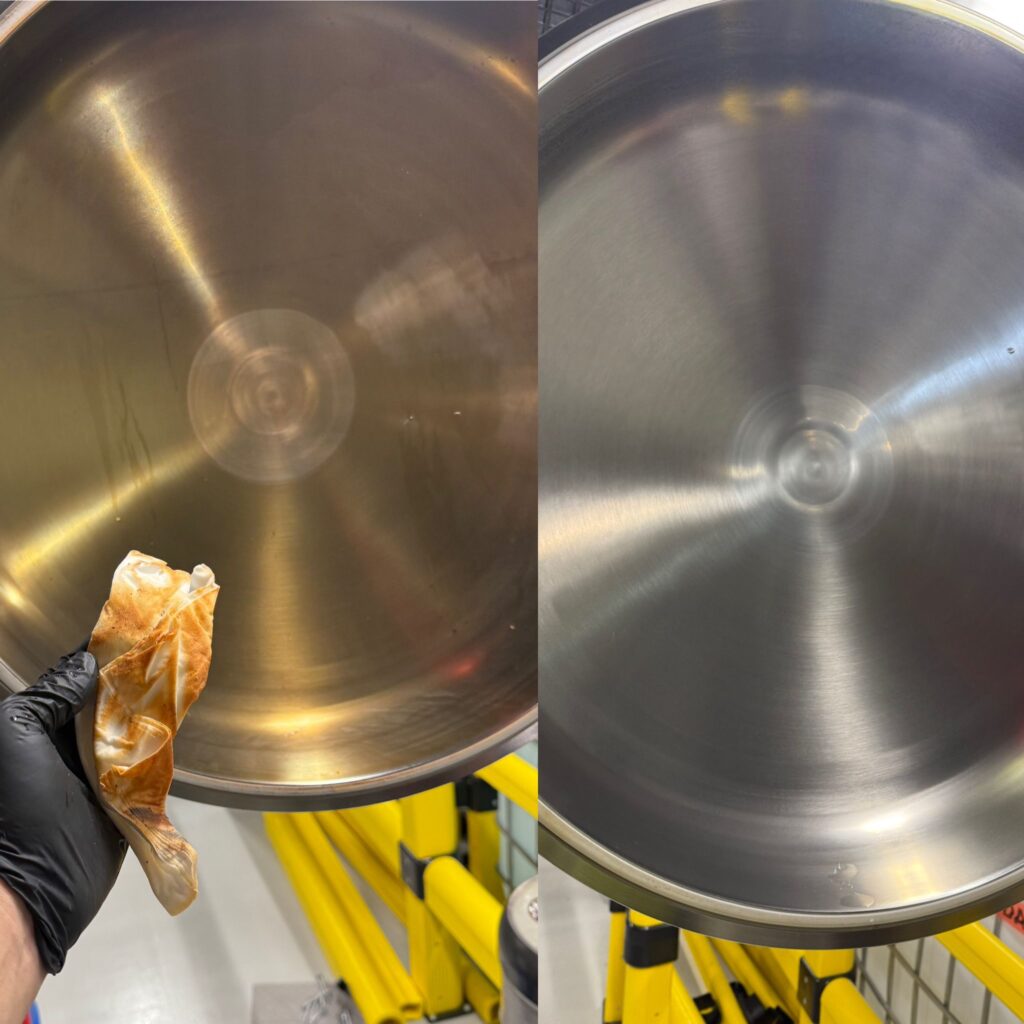
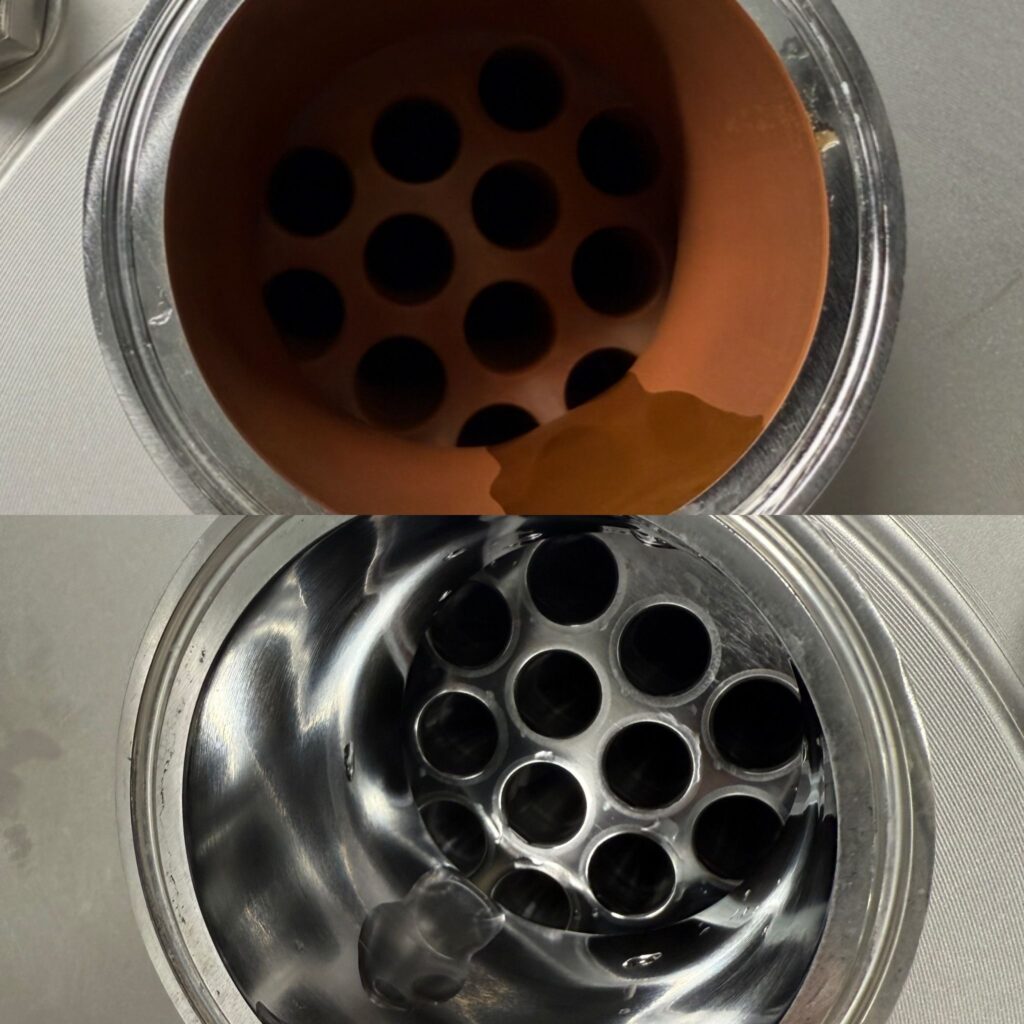
Rouging is a common maintenance issue for pharmaceutical companies operating stainless steel systems, especially those using high-purity water or steam at elevated temperatures. Under these conditions, iron oxides can form on the stainless steel surface, causing a reddish discoloration. This is typically caused by the leaching of iron from the stainless steel itself, which, when exposed to high temperatures and pure water, reacts and forms the oxide. An organic biofilm can also develop over the iron oxide layer, further complicating the cleaning process.

If not addressed, the iron oxide layer can begin to flake off, contaminating the water or steam system and causing surface pitting. This can lead to the degradation of the stainless steel surface, reducing its corrosion resistance and increasing the likelihood of microbial growth, which poses a risk to product purity and overall system performance. Over time, this can cause further deterioration of the stainless steel, compromising system integrity.

Regular maintenance practices, such as derouging and passivation, are essential to address rouging and maintain system performance.

These procedures help restore the stainless steel’s protective layer, ensuring the integrity of the system, preventing contamination, and ensuring compliance with strict pharmaceutical and regulatory standards.
In the ASME BPE 2026 guidelines, the American Society of Mechanical Engineers (ASME) classifies rouging into three distinct categories based on its attachment to stainless steel surfaces and the difficulty of removal.

  • Class I Rouge: This type of rouge is weakly attached to the surface and can be easily removed or dissolved. It is primarily composed of hematite (red ferric iron oxide) with low levels of other oxides or carbon. Because of its relatively simple composition and weak bond to the surface, it is the least problematic to treat and remove from the system.
  • Class II Rouge: This rouge is more complex and consists mainly of hematite or ferric oxide, along with traces of chromium and nickel oxides, and a small amount of carbon. Class II rouge is more difficult to remove compared to Class I, requiring longer cleaning times and possibly more aggressive cleaning methods to effectively eliminate it from the system.
  • Class III Rouge: This is the most challenging type of rouge to remove. It forms under high-temperature conditions and consists primarily of magnetite iron oxide, with some substitution of chromium, nickel, or silica in the oxide structure. These deposits are more chemically complex and structurally stronger, making them significantly harder to remove. Class III rouge often contains significant amounts of carbon due to the reduction of organic materials present in the water. This can lead to the formation of a black “smut” film during derouging, which is even more difficult to treat and clean from surfaces.
  • Properly identifying the class of rouge present is critical for selecting the right cleaning method. Each class requires different approaches for effective removal, and understanding these differences ensures that cleaning and derouging are performed efficiently, maintaining the integrity and cleanliness of the system.

FAQ — Derouging

What is rouging?
Rouge is iron oxide contamination that forms on the internal surfaces of high-purity stainless steel systems, particularly in WFI systems and steam loops. It appears as discoloration ranging from red to dark brown. It’s a contamination issue and, in pharmaceutical and biotech environments, a regulatory one.
ASME BPE 2026 classifies rouge into three categories based on attachment to the surface and difficulty of removal. Class I is weakly attached, composed primarily of hematite, and the easiest to remove. Class II is more complex, with traces of chromium and nickel oxides, and requires longer or more aggressive cleaning than Class I. Class III is the most challenging, forming under high-temperature conditions with a magnetite-based structure that’s more chemically complex and structurally stronger, sometimes leaving a black “smut” film, and generally requiring chemical derouging followed by passivation. The class determines the correct derouging chemistry and sequence.
When rouge is visible on inspection, when product quality is at risk, or when your next audit or validation cycle requires it. Deferring derouging accelerates passive layer breakdown. Class III rouge in particular doesn’t improve on its own.
Derouging removes the oxide contamination. Passivation rebuilds the protective chromium oxide layer afterward. You don’t passivate over rouge, and derouging alone doesn’t leave the surface protected. BCS performs both in sequence, with validation documentation covering each step.
ASME BPE 2026 is the primary reference for derouging classification and treatment in high-purity bioprocessing systems. BCS also works to ASTM A380/A380-25 for cleaning and to ASTM A967/A967M-25 for the passivation step that follows.
Pre-treatment inspection (including bore-scope where required), chemical derouging using our BIOPASS® product line, passivation per ASTM A967/A967M-25, Ferroxyl testing, and a full validation package including Certificate of Compliance. Work is delivered turnkey, on-site at your facility or in our workshop, operating under our ISO-certified Quality Management System, and every package is audit-ready.
Yes. Most derouging projects include passivation in the same campaign. Combining them reduces downtime and gives you a single validation package covering both treatments.

Seamless & Efficient

On-Site or In-Shop Flexibility

Derouging services can be delivered at your facility or in our ISO-compliant workshop, depending on system design and access.


Rouging may occur but not limited to these systems:

  • Pure Steam Generators (PSGs)
  • Steam Piping Systems
  • Hot WFI Systems
  • Hot PW Systems
  • Production Systems
  • Vapor Compression stills
  • Autoclave – Sterilizers – Steam Ovens

Schedule a Derouging Assessment Today

Let us help restore your system’s surface integrity and regulatory compliance with a custom derouging plan.