
Services

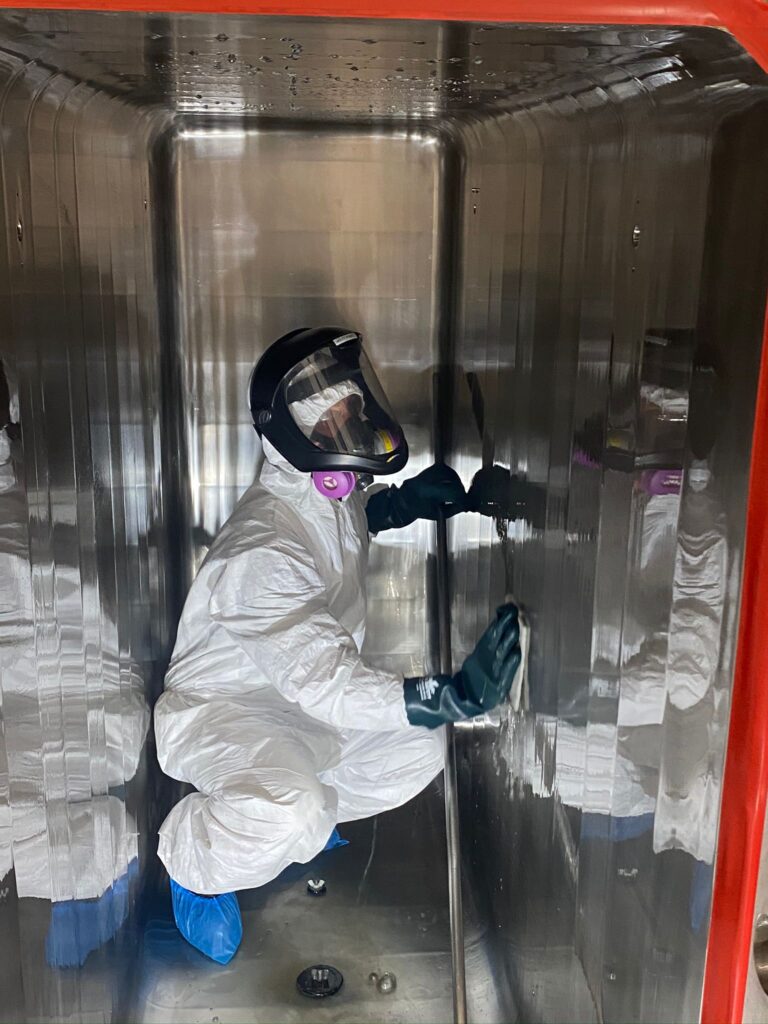
High Purity Cleaning

BCS Inc. has been a trusted industry leader in High Purity Cleaning for over 30 years.

Our proven chemical cleaning processes and commitment to quality help ensure our customers’ equipment consistently meets the stringent cleanliness standards required by the FDA and other regulatory bodies.

We have developed advanced procedures and proprietary chemistries that not only achieve exceptional cleanliness but also prioritize safety—for both our employees and your facility. Our controlled processes are designed to reduce contamination risks and maintain compliance across critical environments, including pharmaceutical, biotech, and semiconductor industries.

We’re excited to announce the expansion of our facility, which includes the construction of new cleanrooms and laboratories designed to meet stringent FDA and ISO standards.

BCS Inc. offers High Purity Cleaning to many systems and parts, some include:

  • WFI, HWFI, PW, DI, RO Piping and Tanks
  • Autoclave/Steam Sterilizer
  • Bioreactors
  • CIP + SIP Systems
  • Clean Steam + Pure Steam Generators and Piping
  • Production Equipment
  • Fermentors
  • Lyophilizer/Freeze Dryers
  • Gas/Nitrogen Piping
  • Medical Equipment
  • Vessels and Tanks
  • Product and Process Lines

Our High Purity and Precision Cleaning services are available both in-house and on-site at customer facilities, providing flexibility without compromising quality or compliance.
Seamless & Efficient

Ready to Customize Your Cleaning Plan?

BCS Inc. offers tailored passivation and high purity cleaning solutions to meet the unique needs of your equipment and operational standards.


Contact us today to learn how we can develop a customized plan that ensures peak performance and regulatory compliance for your systems.

 

Frequently Asked Questions

Are there service providers offering preventative maintenance for cleanroom piping?
Yes. BCS runs a Preventative Maintenance Program for the high-purity piping that serves cleanrooms and GMP production areas: WFI and PW loops, clean steam lines, CIP systems and stills. The program starts with a bore-scope inspection of your system and a written inspection report. From there, we schedule the work it needs, such as derouging, re-passivation to ASTM A967 or ASME BPE 2026, or sanitization and biofilm removal. Work is done on-site, coordinated with your maintenance and validation teams so production isn’t disrupted, and our on-site Quality Control Team tests the system as part of the program.
It depends on the system. For most systems we recommend an annual inspection. How often the system needs service varies: many need it once a year, some every six months, and others can go two years. Operating temperature, the water quality of the process stream, system age and your facility’s maintenance schedule all play a part. If a system hasn’t been inspected in over 12 months, BCS can perform a bore-scope assessment and recommend a schedule. Any time the system is opened for welding, repair or modification, it should be re-passivated per ASTM A967 or ASME BPE 2026 before it returns to service.
Purity Cleaning Services are specialized chemical cleaning processes designed to help equipment meet stringent cleanliness standards required by the FDA and other regulatory bodies.
BCS Inc. has been a trusted industry leader in High Purity Cleaning for over 30 years.
Purity Cleaning Services are used in critical environments, including pharmaceutical, biotech, and semiconductor industries.
BCS Inc. offers High Purity Cleaning for WFI, HWFI, PW, DI and RO piping and tanks, autoclaves, steam sterilizers, bioreactors, CIP and SIP systems, clean steam and pure steam generators and piping, production equipment, fermentors, lyophilizers and freeze dryers, gas and nitrogen piping, medical equipment, vessels and tanks, and product and process lines.
Yes. BCS Inc. provides High Purity and Precision Cleaning services both in-house and on-site at customer facilities.
Yes. BCS Inc. offers tailored passivation and high purity cleaning solutions to meet the unique needs of each customer’s equipment and operational standards.
Related Resources: ASTM A967 vs. A380 guide