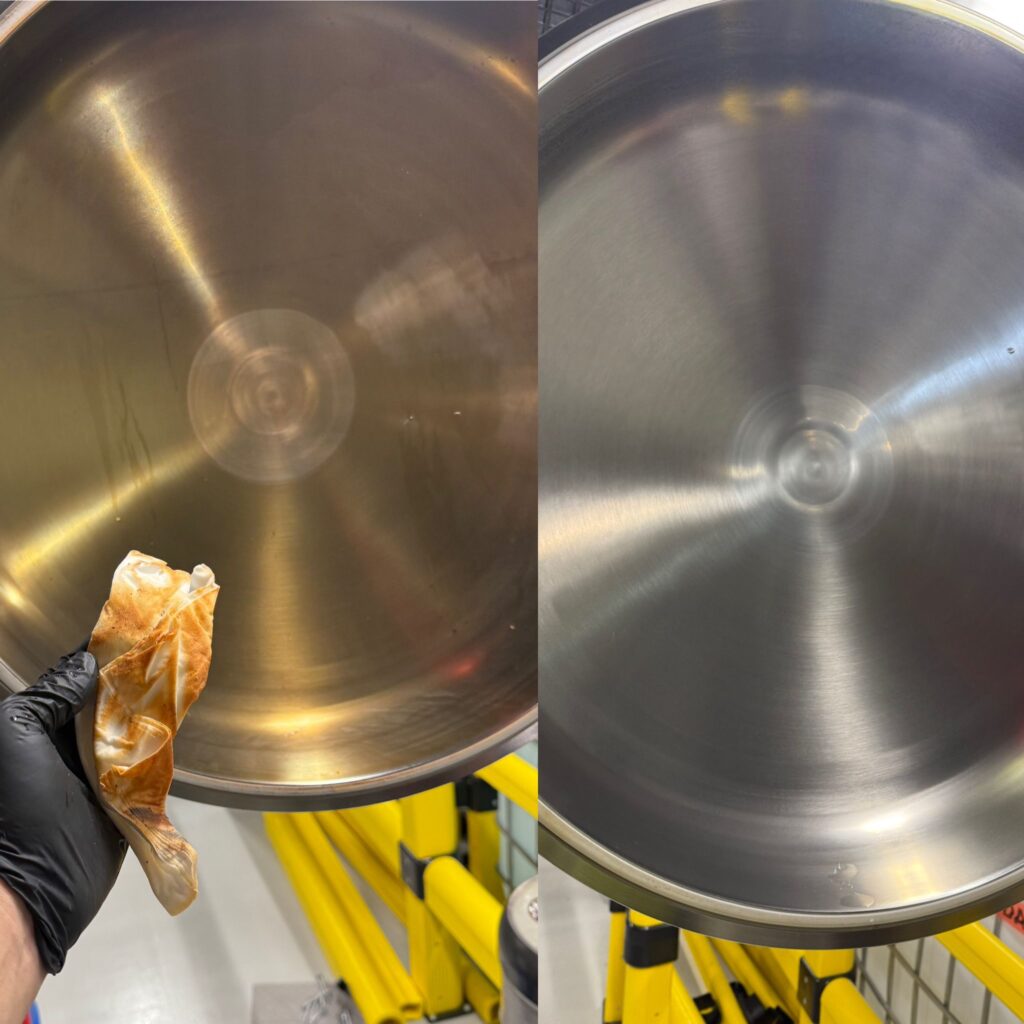
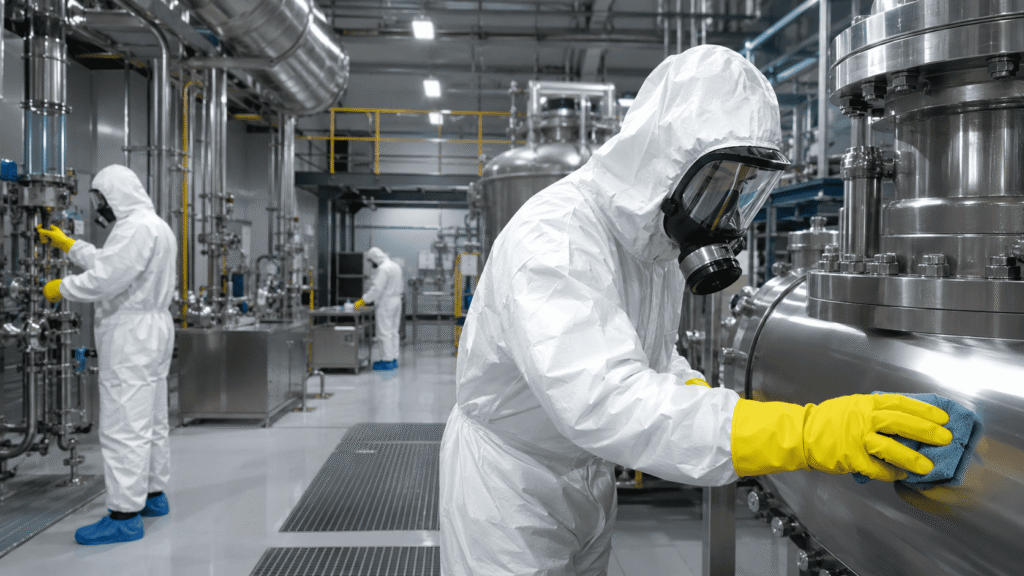
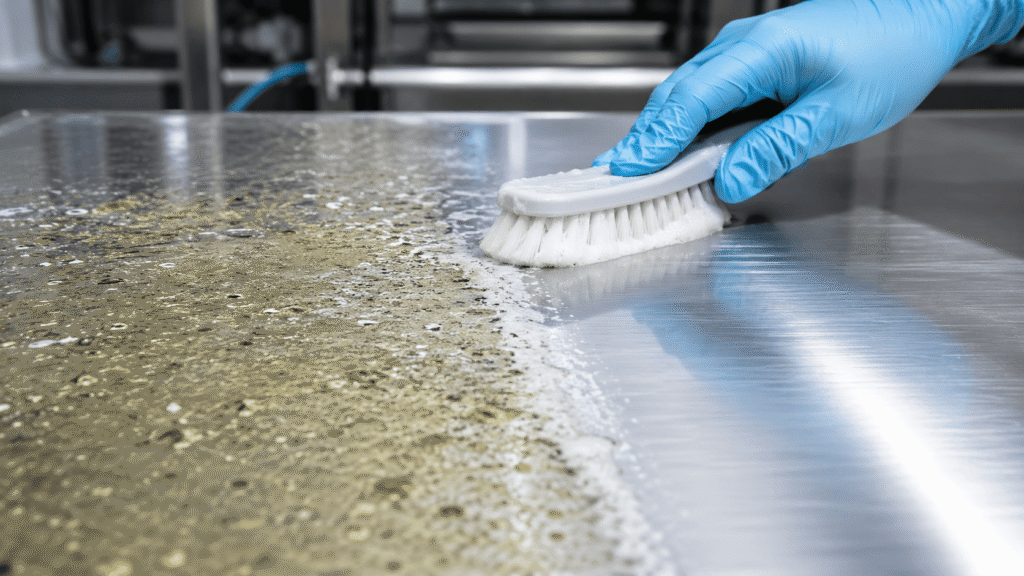
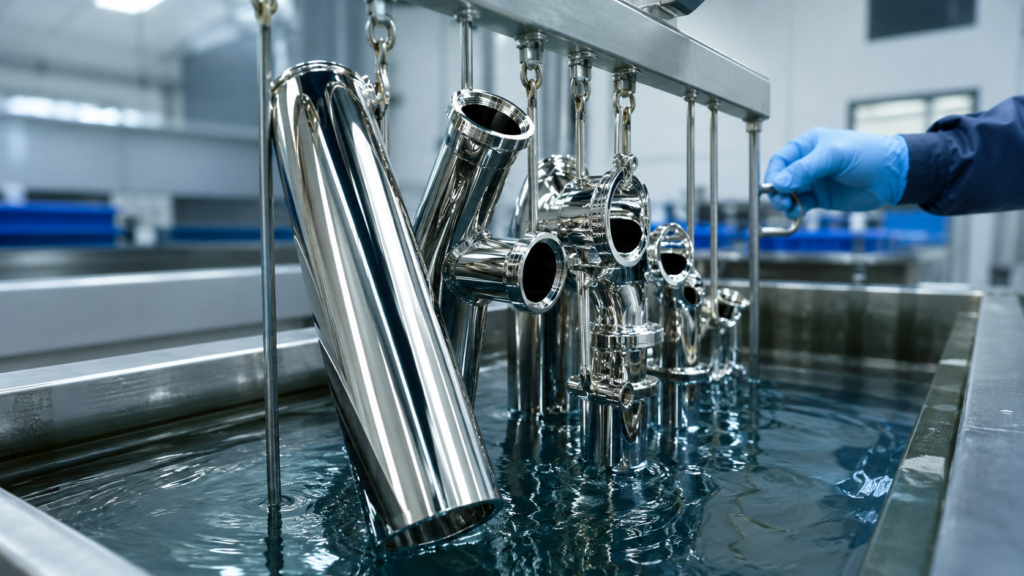
Biofilm removal is essential for facilities that depend on clean, controlled, and reliable high-purity systems. In pharmaceutical, biotechnology, food and beverage, cleanroom, and high-purity water environments, microbial buildup can form inside piping, tanks, vessels, process equipment, and water loops, creating risks for contamination control, system efficiency, product integrity, and compliance readiness.
Biofilm removal is the controlled cleaning and sanitization process used to remove microbial buildup from internal surfaces such as piping, tanks, vessels, water loops, and process equipment.
At BCS BioClean, we provide professional sanitization and biofilm removal services for critical industrial systems. Based in Oakville, Ontario, BCS BioClean supports high-purity and precision cleaning projects across North America. With more than 30 years of experience, ISO 9001:2015 quality management, and technical expertise in regulated environments, our team helps facilities protect system performance, equipment integrity, and microbial control.
What is biofilm removal?
Biofilm removal is the process of reducing or eliminating microbial buildup that adheres to surfaces inside industrial systems. Biofilm is a complex layer of microorganisms that can form inside piping, tanks, vessels, production equipment, and high-purity water systems.
In simple terms, biofilm acts like a protective microbial layer. Once it develops, it can become difficult to remove with standard cleaning alone because microorganisms may be embedded in a protective matrix. This is why facilities often need a controlled sanitization and microbial control protocol designed around the system, materials, risk level, and compliance requirements.
For high-purity systems, biofilm removal is especially important because microbial contamination can affect cleanliness, process consistency, system performance, and audit confidence.
Biofilm removal is not just routine cleaning. It is a critical sanitization process used to protect high-purity systems from microbial buildup, contamination risk, microbiologically influenced corrosion, equipment inefficiency, and compliance issues. For regulated environments, a documented microbial control plan can support safer operations, stronger quality control, and long-term system reliability.
Why does biofilm form in industrial systems?
Biofilm can form when microorganisms attach to a surface and begin to multiply. In high-purity environments, this can happen inside water loops, piping, tanks, vessels, valves, fittings, and process equipment.
Even systems that appear clean may develop microbial buildup in areas where flow, temperature, surface condition, moisture, or nutrients allow microorganisms to persist. Biofilm can also develop in hard-to-reach areas, dead legs, internal piping, weld zones, and components that are difficult to inspect without specialized tools.
Common areas where biofilm may develop include:
- Water for Injection systems
- Purified water loops
- Process and product systems
- Water pre-treatment piping
- CIP piping and panels
- Tanks and vessels
- Equipment cleaning and disinfection systems
- Potable water lines
- Process piping
- High-purity utility systems
Why is biofilm removal important?
Biofilm removal is important because untreated microbial buildup can create operational, quality, and compliance risks. In critical systems, biofilm can interfere with cleaning, sanitization, sterilization, flow efficiency, and product safety.
For facilities operating in regulated industries, professional biofilm removal services can help support:
- Microbial control
- Product integrity
- System reliability
- Equipment protection
- Audit readiness
- Quality documentation
- Preventive maintenance
- Long-term contamination control
A strong sanitization and biofilm remediation program can also help reduce the risk of recurring microbial issues by addressing the system at a deeper level instead of relying only on surface-level cleaning.
What are the main benefits of biofilm removal?
Better microbial control
The main goal of biofilm removal is to help control microbial buildup inside critical systems. This is especially important in pharmaceutical, biotech, food-grade, cleanroom, and high-purity water applications.
Improved system performance
Biofilm can affect system efficiency by accumulating inside piping, tanks, vessels, and process equipment. Industrial biofilm cleaning can help restore cleaner internal surfaces and support better system performance.
Reduced contamination risk
When biofilm remains untreated, it can become a source of recurring contamination. A professional biofilm removal protocol helps reduce this risk and supports a cleaner operating environment.
Protection against microbiologically influenced corrosion
Biofilm-related issues can contribute to microbiologically influenced corrosion, also known as MIC. Removing microbial buildup can help facilities protect equipment integrity, reduce corrosion-related risk, and support longer system life.
Stronger compliance readiness
Regulated industries need documented processes, quality control, and consistent cleaning protocols. Biofilm removal can support audit readiness when performed with controlled procedures and proper documentation.
Less downtime and fewer disruptions
A tailored sanitization plan can help facilities address microbial concerns before they lead to larger operational issues, failed inspections, emergency maintenance, or costly shutdowns.
Biofilm removal vs. standard cleaning: what is the difference?
Biofilm removal and standard cleaning are related, but they are not the same. Standard cleaning may remove visible residue, loose soil, or surface contamination. Biofilm removal focuses on microbial buildup that adheres to internal surfaces and may require a more specialized process.
Process | Main purpose | Best used for |
Standard cleaning | Removes visible residue, soil, and general surface contamination | Routine cleaning and basic maintenance |
Sanitization | Reduces microbial levels using controlled procedures | Systems that require microbial control |
Biofilm removal | Targets microbial buildup attached to internal surfaces | High-purity systems, water loops, tanks, vessels, and process equipment |
Preventive maintenance | Helps reduce recurring contamination risk | Regulated facilities and critical utility systems |
For high-purity environments, biofilm removal should be treated as part of a broader contamination control strategy, not as a one-time cleaning task.
Which industries need biofilm removal?
Biofilm removal is important for any industry where microbial control, sanitation, and process reliability matter.
Pharmaceutical manufacturing
Pharmaceutical facilities depend on clean systems to support production quality and compliance. Biofilm removal can help protect water systems, process piping, tanks, vessels, and equipment used in regulated manufacturing environments.
Biotechnology
Biotech operations often rely on high-purity systems and sensitive process equipment. Sanitization and microbial control help reduce microbial risk and support better system reliability.
Food and beverage processing
Food and beverage facilities need sanitary process vessels, piping, and production systems. Biofilm removal can help reduce contamination risk and support safer processing environments.
Cleanroom operations
Cleanrooms require strict contamination control. Biofilm removal may support systems connected to cleanroom production, utilities, and controlled environments.
High-purity water systems
High-purity water systems, including DI, RO, PW, WFI, and pure steam systems, require strong microbial control. Industrial biofilm cleaning can help protect system cleanliness, consistency, and reliability.
Medical and healthcare facilities
Some healthcare and medical environments require cleaning support for chambers, sterilization-related systems, and critical equipment. Professional sanitization can help support safer and more reliable system operation.
What systems commonly need biofilm removal?
Biofilm removal can be used in many critical systems where microbial buildup may affect cleanliness, performance, or compliance. Common applications include:
- Water loops
- Purified water systems
- Water for Injection systems
- Process piping
- Product contact systems
- CIP systems
- Tanks and vessels
- Stainless steel piping
- Utility systems
- Cleanroom-related equipment
- Food-grade processing systems
- Pharmaceutical production systems
This service is especially valuable when microbial contamination is recurring, difficult to control, or connected to a critical process environment.
How does BCS BioClean approach biofilm removal?
BCS BioClean provides sanitization and biofilm removal services for high-purity, sanitary, and regulated industrial systems. Our approach is designed around the specific system, material compatibility, contamination risk, and operational needs of each facility.
A professional biofilm removal process may include system assessment, chemical cleaning, controlled sanitization, microbial control procedures, rinsing, inspection, and service documentation. The goal is to remove microbial buildup while protecting sensitive components and minimizing unnecessary downtime.
BCS BioClean’s approach focuses on:
- High-purity system compatibility
- Stainless steel and cleanroom system protection
- Controlled sanitization procedures
- Microbial buildup removal
- Documentation and quality support
- Minimal disruption to facility operations
- Facility-specific cleaning protocols
This matters because every system is different. A water loop, tank, CIP panel, piping system, or production vessel may require a different protocol depending on its design, usage, material, microbial risk, and compliance requirements.
When should your facility consider biofilm removal?
Your facility should consider biofilm removal when there are signs of microbial risk, recurring contamination, reduced system efficiency, or concerns about compliance.
Biofilm removal may be necessary when:
- Microbial levels are difficult to control
- Sanitization results are inconsistent
- A water loop or process system shows recurring contamination
- Equipment efficiency has declined
- A system has been inactive or underused
- Tanks, vessels, or piping need deeper sanitization
- There are concerns about microbiologically influenced corrosion
- An audit or inspection requires stronger documentation
- Preventive maintenance is needed for a critical system
Even if biofilm is not visible, it may still be present inside internal surfaces. That is why inspection, risk assessment, and documented sanitization protocols are important for high-purity operations.
How does biofilm removal support compliance readiness?
Biofilm removal supports compliance readiness by helping facilities maintain cleaner systems, stronger microbial control, and better documentation. In regulated industries, cleaning activities often need to be supported by quality records, inspection details, controlled procedures, and service documentation.
A documented biofilm removal plan can support:
- Internal quality systems
- Preventive maintenance programs
- Audit preparation
- Corrective action plans
- Contamination control strategies
- System qualification and validation support
- Long-term operational reliability
For high-purity and regulated environments, documentation is not an extra. It is part of the value of the service.
Why choose BCS BioClean for biofilm removal?
Choosing the right provider for biofilm removal matters because critical systems need more than basic cleaning. They need controlled procedures, industry knowledge, compatible chemistry, documentation, and experience with high-purity environments.
BCS BioClean brings more than 30 years of high-purity and precision cleaning experience, ISO 9001:2015 quality management, and technical expertise across pharmaceutical, biotech, clean manufacturing, food and beverage, cleanroom, nuclear, aerospace, military, and high-purity water applications.
BCS BioClean also provides related services such as high-purity cleaning, passivation, clean for oxygen services, pickling and passivation, derouging, inspection services, descaling, clean room cleaning, and electropolishing.
That combination allows facilities to address biofilm removal as part of a larger system integrity strategy, not just a single sanitization event.
FAQ about biofilm removal
What is biofilm removal?
Biofilm removal is the process of reducing or eliminating microbial buildup that adheres to internal surfaces such as piping, tanks, vessels, water loops, and process equipment.
Why is biofilm removal important in high-purity systems?
Biofilm removal is important because microbial buildup can affect system cleanliness, reduce equipment efficiency, compromise sanitization results, and create compliance risks.
What systems commonly need biofilm removal?
Common systems include Water for Injection systems, purified water loops, process and product systems, CIP piping, tanks, vessels, water pre-treatment piping, and potable water lines.
Can biofilm cause corrosion?
Yes. Biofilm-related issues can contribute to microbiologically influenced corrosion, also known as MIC, which may affect equipment integrity and system reliability.
Is biofilm removal the same as sanitization?
Not exactly. Sanitization reduces microbial levels, while biofilm removal specifically targets microbial buildup attached to internal surfaces. In critical systems, both may be part of the same controlled cleaning protocol.
Who provides professional biofilm removal services?
BCS BioClean provides professional biofilm removal and sanitization services for high-purity, sanitary, and regulated industrial systems across North America.
Contact BCS BioClean
If your facility needs professional biofilm removal for high-purity, sanitary, or regulated systems, BCS BioClean can help. Our team provides sanitization and microbial control solutions designed to protect system performance, equipment integrity, product quality, and compliance readiness.
Contact BCS BioClean today to discuss your water loop, piping, tank, vessel, CIP system, cleanroom system, or process equipment requirements.
Call: 1-888-CALL-BCS
Email: info@bcsbioclean.ca
Location: 735 Weller Ct, Oakville, ON L6K 3S9, Canada