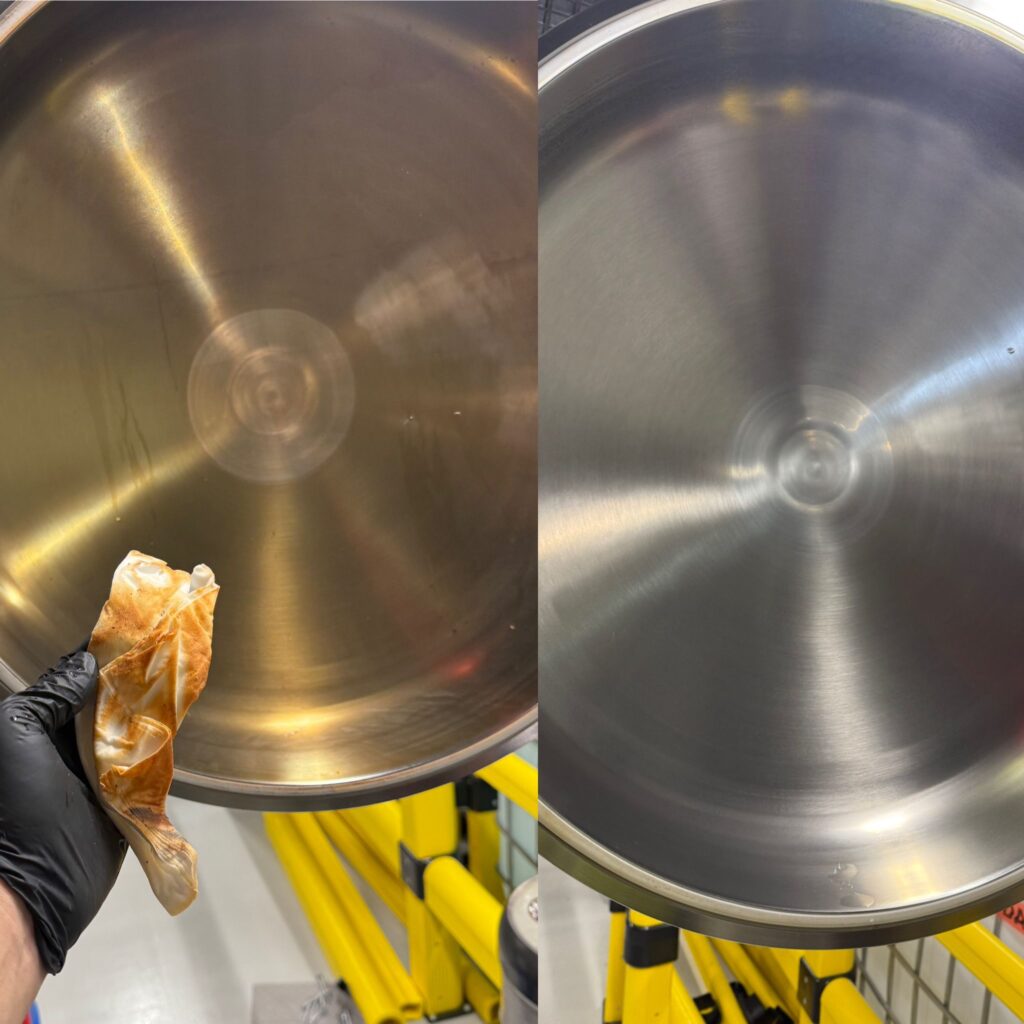
Rouge is iron oxide contamination that deposits on the internal surfaces of stainless steel systems, particularly in pharmaceutical, biotech, and high-purity processing environments that handle water or steam at elevated temperatures. It appears as a reddish-brown, orange, or dark deposit on tubing, vessel walls, and fittings. Derouging is the chemical process that removes it.
Left untreated, rouge signals that the passive chromium oxide layer protecting the stainless steel has been compromised. In regulated environments, the visible deposit is evidence of a deeper compliance problem.
What Causes Rouge?
Stainless steel resists corrosion because of a thin, stable chromium oxide layer on its surface. When that layer degrades, iron in the steel oxidizes. The resulting iron oxide deposits are what we call rouge.
The most common triggers are heat and water. WFI loops, purified water systems, and steam-in-place systems create the thermal and chemical conditions where rouging accelerates. Operating temperatures above 65°C significantly increase the rate of iron oxide formation. Systems that cycle between high and low temperatures, or that see periods of stagnant water, are particularly susceptible.
Fabrication is another source. Welding, grinding, and mechanical work can embed free iron in the stainless steel surface or damage the passive layer locally. If the system isn’t passivated after construction or repair, those areas become nucleation points for rouge.
The Three Classes of Rouge (ASME BPE)
ASME BPE 2026 classifies rouge into three categories based on attachment to the stainless steel surface and the difficulty of removal. Knowing which class is present affects how the derouging treatment is designed.
Class I Rouge is weakly attached to the surface and can be easily removed or dissolved. It’s composed primarily of hematite (red ferric iron oxide) with low levels of other oxides or carbon. Because of its relatively simple composition and weak bond to the surface, it’s the least problematic to treat and remove from the system.
Class II Rouge is more complex, consisting mainly of hematite or ferric oxide along with traces of chromium and nickel oxides, and a small amount of carbon. Class II rouge is more difficult to remove than Class I, requiring longer cleaning times and possibly more aggressive cleaning methods to effectively eliminate it from the system.
Class III Rouge is the most challenging type to remove. It forms under high-temperature conditions and consists primarily of magnetite iron oxide, with some substitution of chromium, nickel, or silica in the oxide structure. These deposits are more chemically complex and structurally stronger, making them significantly harder to remove. Class III rouge often contains significant amounts of carbon due to the reduction of organic materials present in the water, which can lead to the formation of a black “smut” film during derouging that’s even more difficult to treat and clean from surfaces.
Properly identifying the class of rouge present is critical for selecting the right cleaning method. Each class requires different approaches for effective removal, and understanding these differences ensures that cleaning and derouging are performed efficiently, maintaining the integrity and cleanliness of the system.
Why Derouging Matters in Regulated Environments
For pharmaceutical and biotech facilities, rouge is a contamination and compliance concern. A system showing Class I rouge has iron oxide particles that can shed into the product stream. In bioprocessing and pharmaceutical water systems, that’s a direct contamination risk.
From a compliance standpoint, a rouged system raises questions during validation and audit. A visible iron oxide deposit is evidence that the passive layer has degraded. GMP guidelines require that processing systems remain clean, controlled, and documented. Rouging is a deviation from that standard.
There’s also a corrosion risk. Rouge is a symptom that the passive chromium oxide layer is under stress. If the rouging isn’t addressed, the underlying stainless steel is more susceptible to pitting, crevice corrosion, and stress corrosion cracking over time, particularly in chloride-containing or acidic process environments.
How Derouging Works
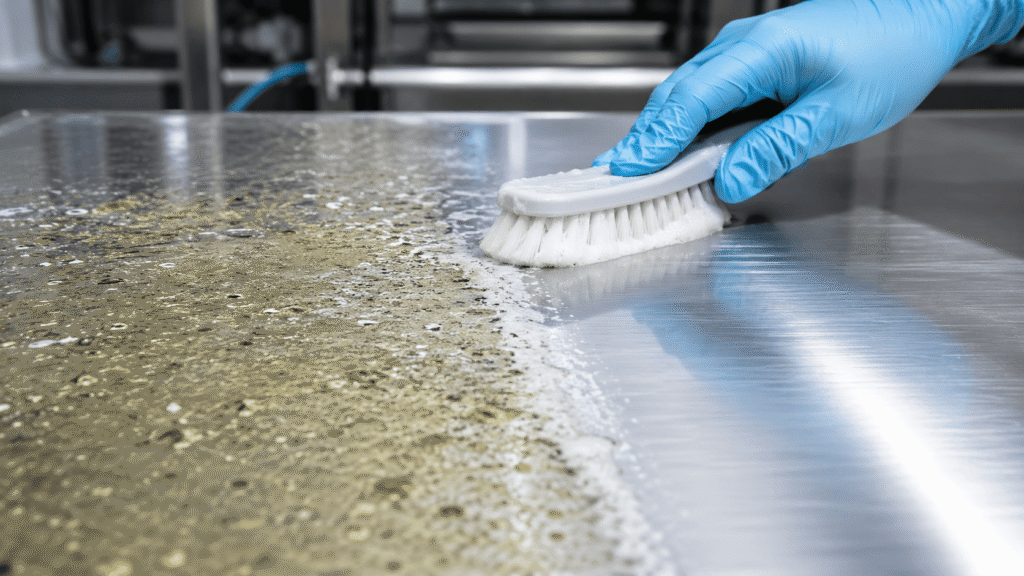
Derouging uses a controlled acid treatment to dissolve the iron oxide deposits from the internal surfaces of the system. The chemistry targets the rouge without attacking the base stainless steel.
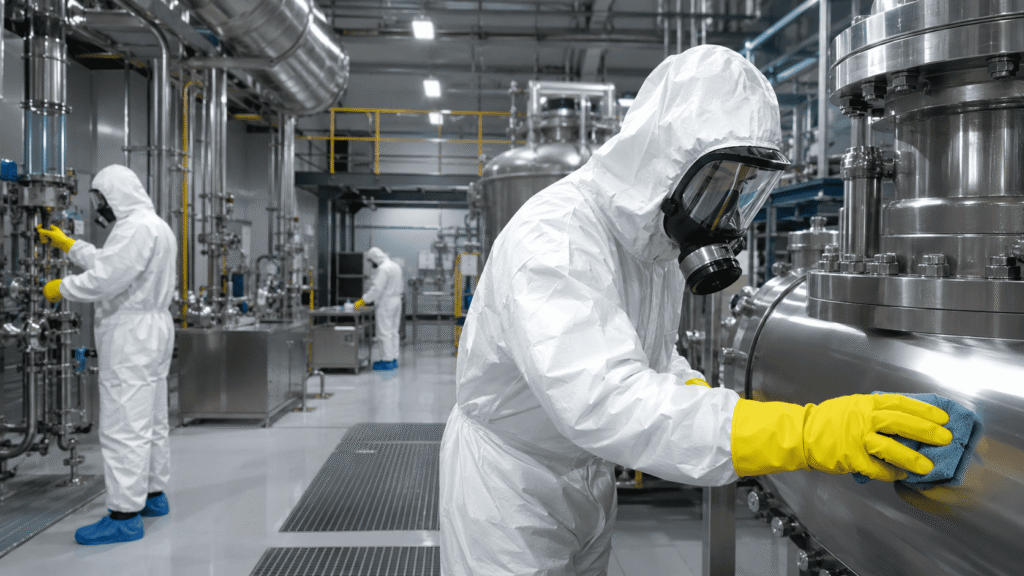
BCS uses our proprietary BIOPASS® chemical formulations for derouging. These are biodegradable and non-flammable, which matters for on-site work in pharmaceutical facilities where chemical safety requirements are strict. We select the formulation and concentration based on the class and severity of the rouging and the metallurgy of the system.
The process follows a defined sequence: pre-inspection, chemical treatment, neutralization, rinse, and post-inspection. BCS performs bore-scope inspection before and after treatment to document the condition of the system and confirm the rouge has been removed. Every project includes a validation report, before-and-after inspection documentation, and a Certificate of Compliance.
Derouging is almost always followed by passivation. Removing rouge dissolves the oxide deposits, but the treatment chemistry also affects the chromium oxide passive layer.
Passivation per
ASTM A967 or ASME BPE 2026 immediately after derouging restores the passive layer and leaves the system in a verified, corrosion-resistant state. Skipping the passivation step after derouging leaves the system vulnerable to re-rouging at an accelerated rate.
BCS performs both treatments in sequence and provides a single compliance package covering the full scope of work.
How Do You Know If Your System Needs Derouging?
The most straightforward sign is visual: discoloration inside tubing, vessels, or fittings that ranges from light orange to dark brown or black. Bore-scope inspection makes it possible to detect and classify rouge in systems that aren’t accessible by direct visual inspection.
Other indicators include:
- Iron particle counts above expected levels in WFI or purified water testing
- A system that consistently fails or flags during routine microbial or chemical sampling near welds or in dead legs
- A visible color change on heat exchangers, spray balls, or filter housings
Rouge can also be found incidentally during scheduled maintenance or after a system modification. Any time a pharmaceutical or biotech system is opened for repair, the interior surfaces should be inspected for rouging before being returned to service.
Reducing the Rate of Re-Rouging
Derouging removes existing rouge, but it doesn’t eliminate the underlying conditions that caused it. Without changes to how the system operates or is maintained, rouge can return within months of treatment.
The most effective steps for slowing re-rouging:
- Passivation after every maintenance event. Any time the system is opened for welding, repair, or modification, re-passivation per ASTM A967 or ASME BPE 2026 should follow before the system returns to service. Mechanical work disturbs the passive layer and introduces free iron.
- Water quality control. Elevated chloride levels, dissolved oxygen, or high conductivity in the process water accelerates rouging. Regular monitoring of WFI and purified water quality gives early warning before deposits become visible.
- Scheduled inspections. Bore-scope inspection on a defined interval allows you to identify early-stage Class I rouge before it migrates or progresses to a more adherent form. Catching it early means less aggressive treatment chemistry and a shorter maintenance window.
- Post-weld treatment. Weld heat tint is a localized oxide that serves as a nucleation site for rouge. Removing heat tint chemically after welding, as part of the passivation step, reduces long-term rouging risk at weld joints.
BCS can review your current maintenance program and identify where the schedule or procedure may be contributing to recurring rouge.
On-Site Service Across North America
BCS has been performing
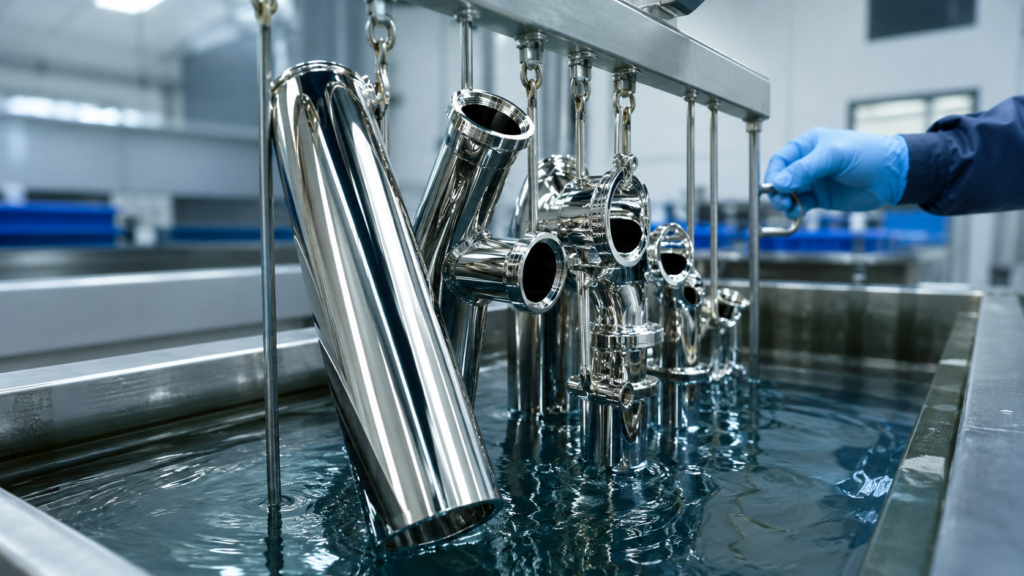
derouging on pharmaceutical, biotech, and high-purity process systems since 1996. We work on-site at your facility or process the components at our workshop in Oakville, Ontario, operating under our ISO-certified Quality Management System. For critical systems that can’t be taken offline for extended periods, we coordinate with your maintenance and validation teams to schedule treatment with minimal disruption.
All derouging projects include full compliance documentation: bore-scope inspection reports, a comprehensive job report (which includes free iron testing results where applicable), and a Certificate of Compliance. If passivation follows derouging, both are covered in a single integrated package.
Frequently Asked Questions
How do I know if my system has rouge versus general contamination?
Rouge classification follows how difficult the deposit is to remove. Class I is weakly attached and easiest to remove. Class II is more complex and requires longer or more aggressive cleaning. Class III is the most difficult, forming under high-temperature conditions and sometimes leaving a black “smut” film. Bore-scope inspection is the most reliable method for confirming rouge and determining its classification. If you’re unsure, BCS can perform a pre-treatment inspection and assess the system before recommending a treatment plan.
How often should pharmaceutical systems be derouged?
There’s no single interval that fits all systems. Frequency depends on operating temperature, the water quality of your process stream, system age, and your facility’s maintenance schedule. Many pharmaceutical facilities schedule derouging as part of a Preventive Maintenance Program, with inspections triggered by operating hours, visual observations, or water quality data. BCS can review your system’s history and usage profile to suggest an appropriate maintenance interval.
Does derouging require the system to go offline?
Yes. Derouging requires internal access to circulate the chemical treatment through the system. For WFI loops and purified water systems, this typically means a planned maintenance window. BCS works with your scheduling team to minimize downtime.
Is derouging followed by passivation on every project?
In almost every case, yes. Removing rouge with acid chemistry affects the chromium oxide passive layer. Passivation per ASTM A967 or ASME BPE 2026 immediately after restores the passive layer and prevents rapid re-rouging. BCS performs both in sequence and covers both in a single compliance package.
What’s the difference between derouging and passivation?
Passivation removes free iron from the stainless steel surface and restores the chromium oxide passive layer. It doesn’t remove rouge that’s already formed. Derouging uses a different chemistry specifically designed to dissolve iron oxide deposits. For systems with active rouge, derouging comes first; passivation follows to protect the treated surface.
Can BCS perform derouging on-site?
Yes. BCS offers on-site derouging across North America for WFI systems, bioreactors, purified water loops, process piping, and vessels. We also perform in-house treatment at our workshop in Oakville for components that can be removed and transported.
Schedule a Derouging Assessment
If your system shows signs of rouge or hasn’t been inspected in over 12 months, BCS can perform a bore-scope assessment and recommend a treatment plan. We provide on-site service across North America with full compliance documentation on every project.
Contact BCS to schedule a derouging assessment.
Related reading:
ASTM A967 vs. ASTM A380 passivation standards ·
Passivation vs. pickling stainless steel