In critical environments where even a microscopic imperfection can lead to system failure or product contamination, surface integrity is non-negotiable. For industries such as biotechnology, pharmaceuticals, and semiconductor manufacturing, electropolishing is a specialized process used to achieve high levels of sterility, cleanability, and corrosion resistance.
What Is Electropolishing?
Unlike mechanical polishing, which uses abrasives that can smear the metal surface or embed particulate matter, electropolishing is an electrochemical process.
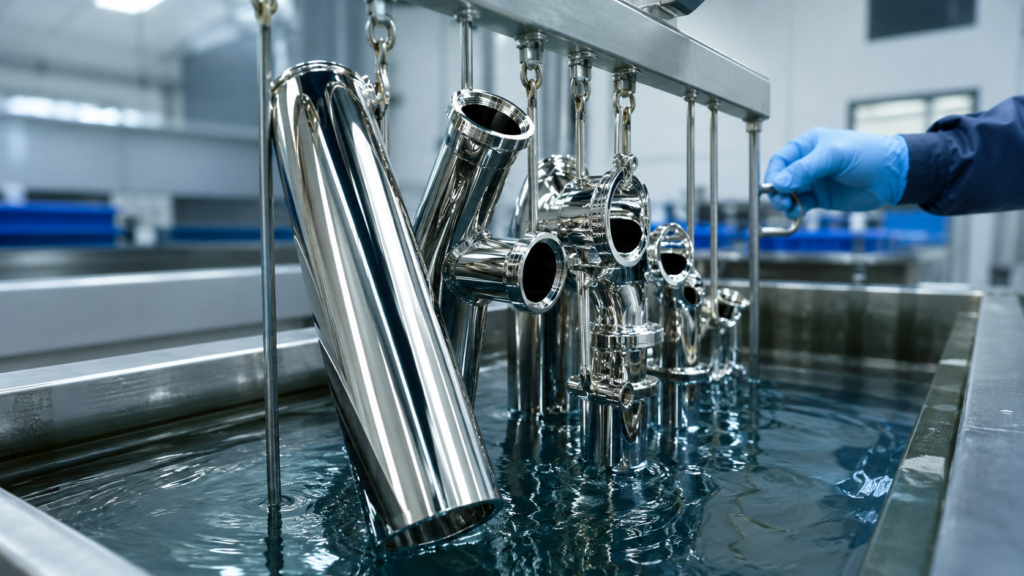
Often referred to as “reverse electroplating,” electropolishing removes a precise, microscopic layer of material from the surface of a metal part. By acting as the anode in a temperature-controlled electrolytic bath, the process dissolves the “peaks” of the surface profile faster than the “valleys,” resulting in a smoother and more uniform finish.
Mechanical Polishing vs. Electropolishing
For high-purity applications, understanding the difference between mechanical and electrochemical surface finishing is important for long-term operational performance.
Feature | Mechanical Polishing | Electropolishing |
Method | Abrasive belts, wheels, or compounds. | Electrochemical bath using anodic dissolution. |
Surface Profile | Moves metal and can create microscopic scratches. | Removes metal and helps level the surface. |
Corrosion Resistance | Moderate, depending on the surface condition. | Improved through controlled surface material removal. |
Micro-Burr Removal | Limited and can push burrs into the metal. | Effective for dissolving small burrs. |
Cleanability | Lower due to scratches and surface irregularities. | Improved due to a smoother surface profile. |
Geometry | Limited to reachable surfaces. | Suitable for complex internal geometries. |
Strategic Advantages of the Electropolishing Process
Partnering with BCS Bioclean for your electropolishing needs provides your facility with several technical and operational benefits.
Enhanced Corrosion Resistance
The process removes free iron from the surface and helps improve the chromium-to-iron ratio, supporting the formation of a clean chromium oxide passive surface.
Biofilm Prevention
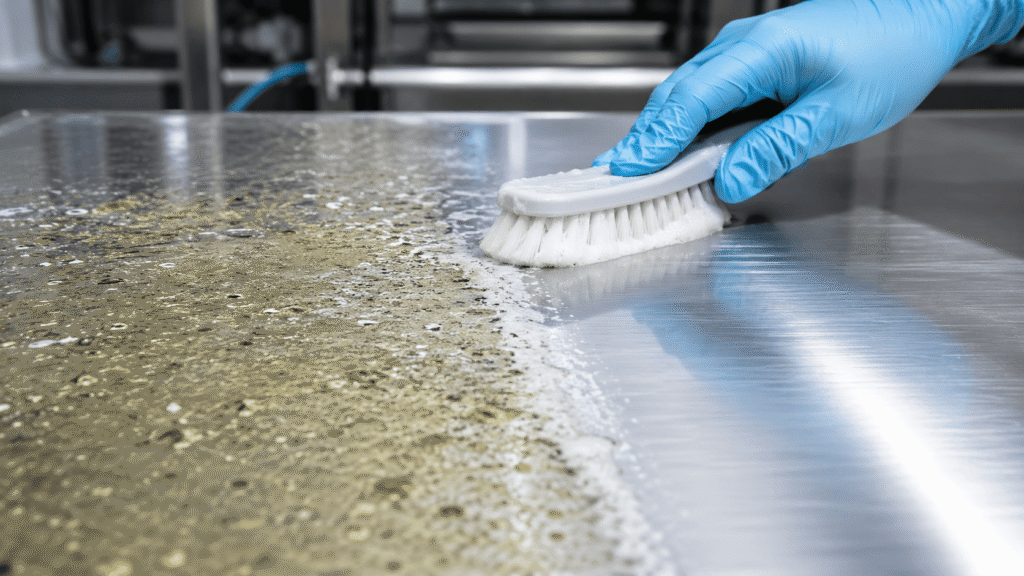
By reducing surface roughness, also known as Ra, electropolishing reduces the “nooks and crannies” where bacteria can take root. This can help ease CIP, or Clean-in-Place, and sterilization cycles.
Micro-Deburring
Electropolishing is an effective method for removing burrs from complex or fragile geometries where mechanical tools cannot reach. This helps reduce the risk of metal particles shedding into your process flow.
Ultra-Clean Results
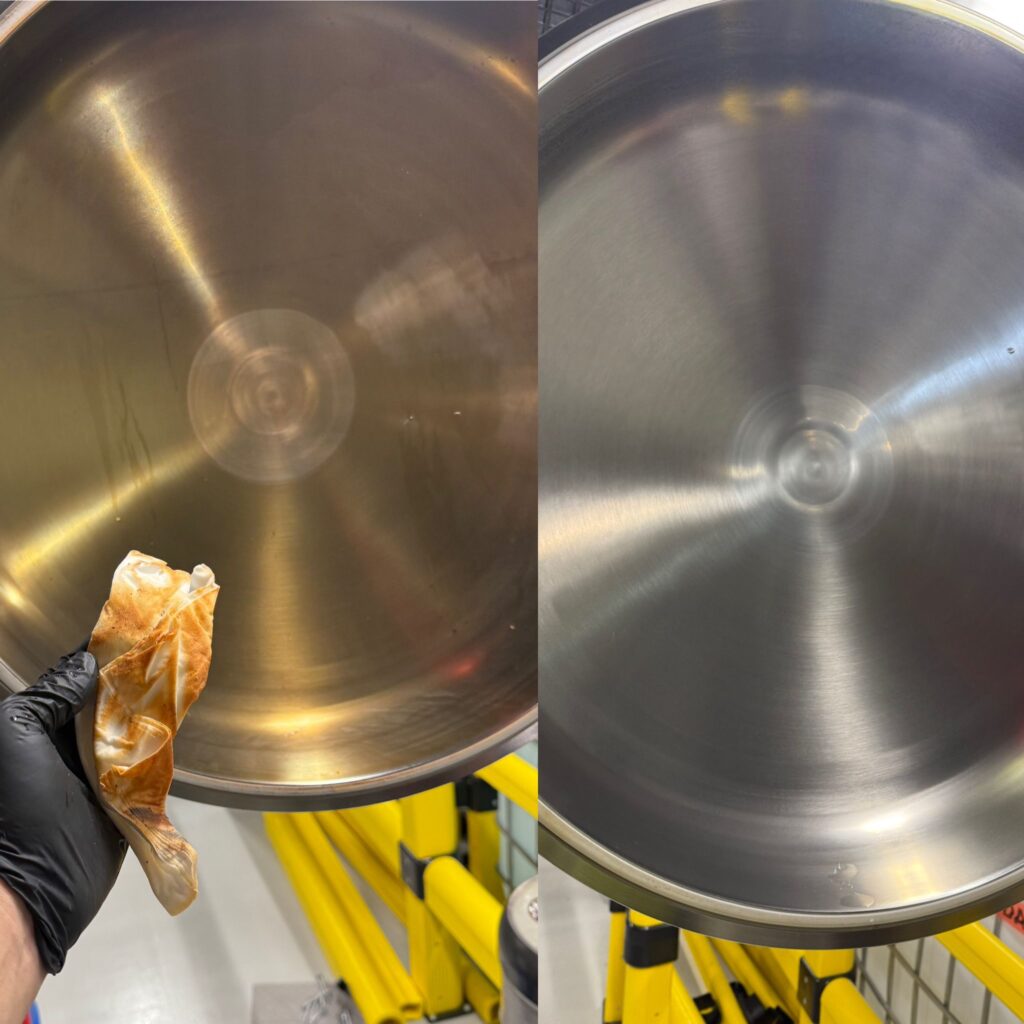
Components are left chemically clean, hydrogen-free, and with a bright, mirror-like finish that reflects the hygiene standards of your facility.
Frequently Asked Questions About Electropolishing
Does electropolishing change the dimensions of my part?
Yes, but only minimally. The process typically removes between 0.0005″ and 0.0015″ of surface material. We precisely control the timing and current to ensure your parts stay within specified tolerances.
Which materials are best suited for electropolishing?
While most metals can be processed, 300 and 400 series stainless steel yield the best results. We also specialize in electropolishing Hastelloy, AL-6XN, and other high-nickel alloys.
What standards do you comply with for electropolishing?
Our processes are designed to meet or exceed ASTM B912 and ASME BPE requirements for bioprocessing equipment.
Can electropolishing remove deep scratches or gouges?
Electropolishing is a finishing process, not a bulk material removal method. While it smooths the surface, deep scratches or heavy weld marks should be pre-treated with mechanical polishing before the electropolishing stage.
Is electropolishing safe for vacuum and semiconductor applications?
Absolutely. By removing the amorphous surface layer and reducing the total surface area, electropolishing can help lower outgassing rates, which is critical for UHP, or Ultra-High Purity, gas delivery and vacuum systems.
Contact BCS Bioclean Today
Ready to improve the purity and performance of your critical systems?
Don’t leave your surface integrity to chance. Whether you need on-site services or laboratory-grade finishing, the team at BCS Bioclean has the technical expertise to help your facility meet high global standards.
Location: 735 Weller Ct, Oakville, ON L6K 3S9, Canada
Email Address: info@bcsbioclean.ca